Guides
Tow Truck Inspection in Alberta vs Ontario: CVIP, Decals and Documents
Tow truck inspection rules differ in Alberta and Ontario. Both provinces use a 12 month cycle, but the issuing body, the paperwork and the penalty differ.
What to take away
- Alberta tow trucks above 4,500 kg registered gross vehicle weight need a CVIP inspection every 12 months.
- Ontario requires an annual safety inspection for commercial tow trucks, plus a Safety Standards Certificate at registration.
- Both provinces ask for current registration, insurance proof and the last inspection report at the appointment.
- A truck with no valid decal can be put out of service at the roadside.
Alberta CVIP cycle and what gets checked
Alberta Transportation runs the Commercial Vehicle Inspection Program. A tow truck registered above 4,500 kg gross vehicle weight is inspected every 12 months.
The facility issues a windshield decal once the truck passes. A first-weeks training checklist is the place to record where that decal sits and what the expiry month means.
The checklist covers brakes, steering and suspension. Tires, lights and coupling gear are checked in the same pass. A wheel-lift and a flatbed carry the same core list, even though the two configurations are built for different recoveries.
Ontario annual safety inspection and the certificate
Ontario requires an annual safety inspection for most commercial trucks, including tow trucks. A licensed inspection station performs the work and applies a yellow sticker showing the expiry month.
The Safety Standards Certificate is a separate document. It records that the truck met minimum standards on the day of the inspection, and the Ministry of Transportation asks for it before a vehicle is registered or transferred.
Ontario layers a trade rulebook on top of the vehicle rules. Regulation 381/19 sets certification and operational requirements that a clean mechanical inspection does not satisfy.
Carriers are registered separately as well, and a CVOR is its own requirement rather than a page attached to the inspection file. The decal is visible from outside, so an officer at a scale can spot a missed month before the driver finds the paperwork.
Alberta and Ontario side by side
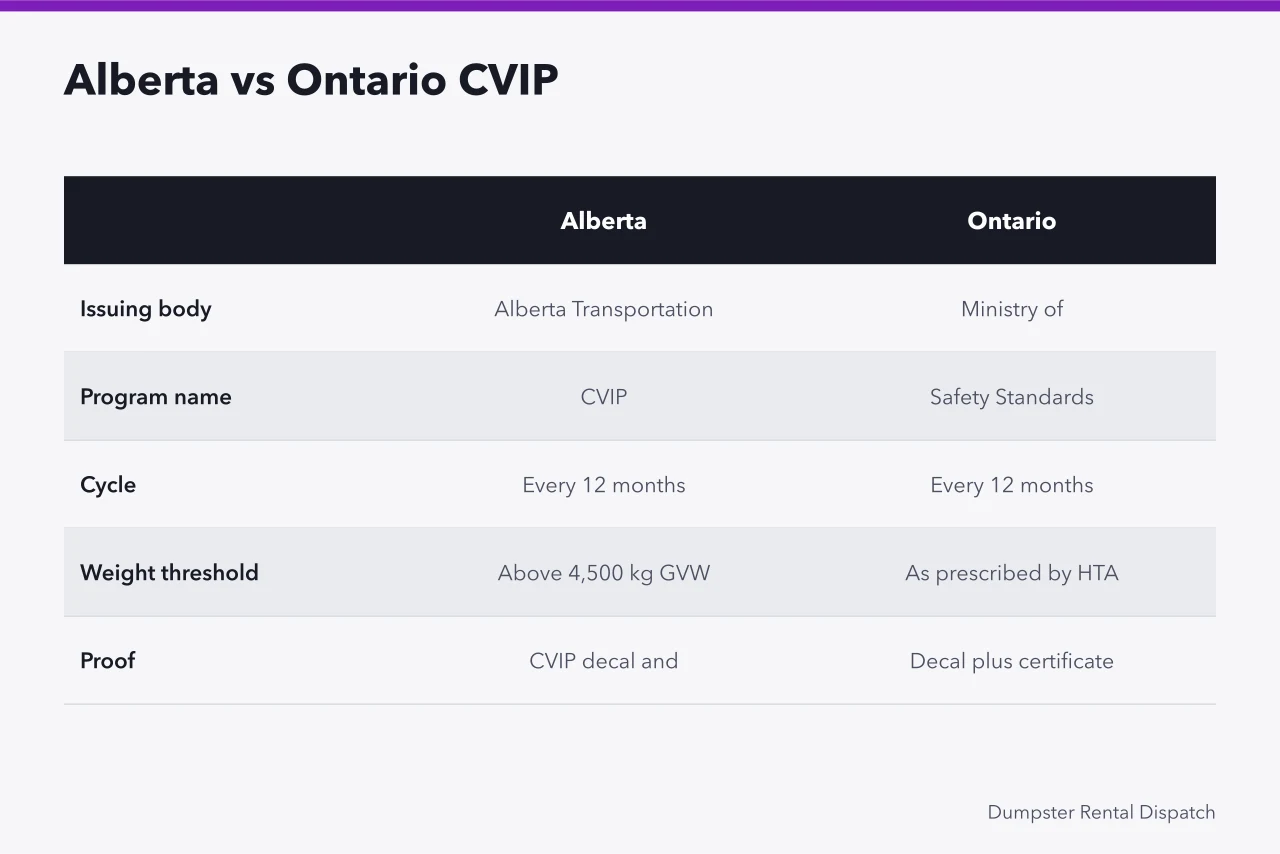
Both provinces inspect heavy trucks on a 12 month cycle. The issuing body and the paperwork are where they part.
Alberta
- Issuing body
- Alberta Transportation
- Program name
- CVIP
- Cycle for heavy trucks
- 12 months
- Weight trigger
- Over 4,500 kg registered GVW
- Proof carried
- CVIP decal and certificate
Ontario
- Issuing body
- Ministry of Transportation
- Program name
- Annual safety inspection
- Cycle for heavy trucks
- 12 months
- Weight trigger
- Trucks, buses and trailers prescribed under the Highway Traffic Act
- Proof carried
- Annual sticker plus Safety Standards Certificate
Documents and how the appointment runs
Have the file ready before the appointment. The facility uses it to confirm the unit and to record defects against the right truck.
- Book a licensed inspection facility and confirm the class of inspection for the truck's weight.
- Bring the current registration and proof of insurance for the unit.
- Bring the last inspection report, or the decal number from the previous cycle.
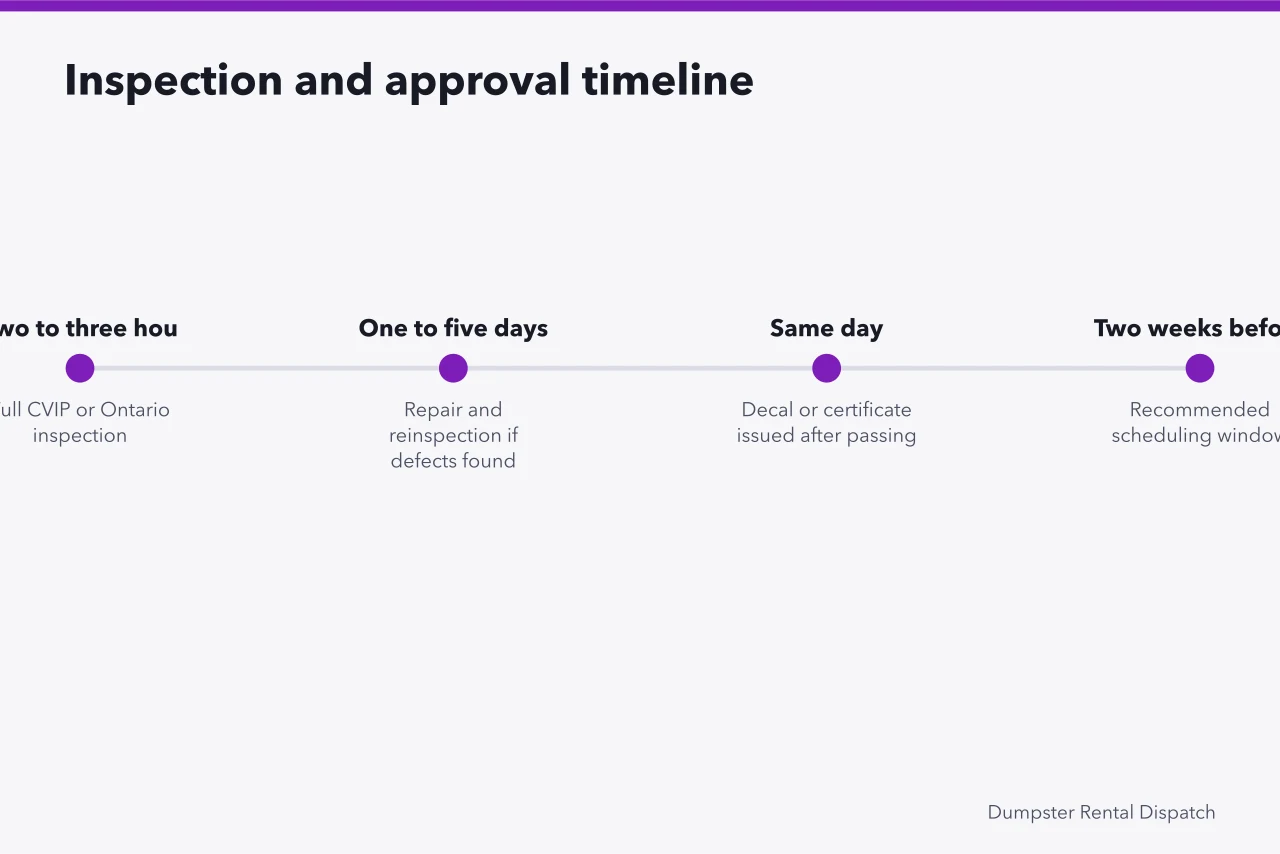
- Leave the truck for two to three hours while the technician works the checklist.
- Repair any defects, return for reinspection, and collect the decal once the truck passes.
Downtime is a cost line of its own, and a weekly cash flow view shows what a truck in the shop does to a first-year operator.
What a failed inspection costs a tow operator
A truck that fails is out of service until the defects are repaired and a reinspection passes. It cannot answer a call while it sits.
A missed inspection removes a truck from the rotation for as long as the repair takes, not for one shift.
Repair and reinspection can add one to five days. The decal comes the same day the truck passes, and plates may not be renewed while an inspection is expired.
A yard, auction site or impound lot can refuse a truck at the gate, which strands the load it was hauling. A parked truck also pushes work onto the rest of the fleet, and hours of service limits cap how much a second driver can absorb.
Scheduling inspections around winter call volume
Book the slot two weeks before the current decal expires. A staggered plan across the fleet beats a week when every truck sits in the shop at once.
Cold weather strains batteries, brakes and winch gear, so a truck lost in January costs more than one lost in June. Demand in this trade follows weather rather than a marketing calendar.
The service model behind roadside assistance explains why calls go to whoever can roll a truck. Keep one file per unit with the certificate, the decal date and any reinspection window.
An operator with three trucks can lose a third of the capacity in a single morning. Inspections belong in the slow weeks, not the storm weeks.