Guides
A guide to Midwest winter towing equipment and safety
Midwest winter towing runs on battery discipline, salt washing and rated recovery gear, plus dispatch changes and traction boards when storms hit.
What to take away
- A no-start at 4 a.m. costs a call, and it is almost always the battery. Load-test every unit before the season and replace anything two winters old.
- Salt destroys frame rails and brake lines from the outside. Wash the undercarriage after each storm cycle, not when rust appears.
- Winter recovery gear is a separate kitchains, snatch blocks, rated straps and traction boards. Inspect rigging before every pull.
- OSHA sets the floor through hazard assessment, PPE and rigging standards. Cold stress training belongs in your logbook with names and dates.
- Winter dispatch is a different job. Add time to every ETA, stage trucks near ramps and hills, and keep a no-solo rule on heavy recoveries.
Cold-weather starting and battery care
A tow truck that will not start is a lost call. In the Upper Midwest, January mornings sit below zero, and a diesel that cranked fine in October can refuse in a Minnesota wind.
Cold cuts available cranking amps. A battery two winters old is already marginal, so test state of charge and load capacity before the season. Clean the terminals and coat them with a corrosion inhibitor.
A block heater is standard equipment here. Plug in overnight when the forecast drops below 20 degrees Fahrenheit, and use a timer so the heater runs a few hours before shift rather than all night. Some operators add an oil pan heater and a battery blanket.
Diesel needs fuel treatment. Number 2 diesel gels in cold, so Midwest drivers switch to a winter blend or add a cold-flow improver. Keep the water separator drained. A gelled filter is a roadside repair you do not want to do twice.
Carry a jump pack rated for your engine, plus spare fuel filters and a filter wrench in the cab. When you spec replacement trucks, the starting system is part of the towing company equipment decision, not an afterthought.
Cold-morning start checklist
- Block heater plugged in and timer set
- Battery load tested within the last month
- Fuel treated for cold flow, water separator drained
- Jump pack charged and in the cab
- Spare fuel filters and wrench on board
- Air tanks drained, no frozen moisture
- Washer fluid rated for below freezing
Run that list at the end of every shift in winter, not at the start. The driver who checks it at 10 p.m. is the one who rolls at 5 a.m.
Salt damage prevention and undercarriage washing
Illinois, Michigan, Ohio and Wisconsin spread millions of tons of salt each winter, and a tow truck spends its life in the spray. Rust starts where salt sits: frame rails, crossmembers, brake lines, spring hangers and the underside of the bed.
Wash the undercarriage, not just the cab. A pressure washer with a 90-degree nozzle reaches the frame, and many operators run a dedicated spray bar at the yard. Wash after every storm cycle, and at minimum twice a week during heavy salt periods.
A rinse that leaves salt behind is wasted effort. Use a detergent made for undercarriage cleaning, then flush with clean water. In freezing weather, wash indoors or accept that doors and locks may freeze.
Apply a lanolin-based or wax-based undercoating before the season. It gives salt a sacrificial layer to attack, and it gets reapplied at midwinter on the most exposed areas.
Brake lines deserve a look every wash. Salt eats steel lines from the outside, and a blown line on a loaded tow is an emergency. Inspect lines, fittings and the air system at the same time. This is basic fleet hygiene, and it belongs in your towing company equipment checklist next to the pressure washer.
Undercarriage wash routine
- Pre-rinse the frame and wheel wells with clean water.
- Apply undercarriage detergent and let it dwell per the label.
- Pressure wash frame rails, crossmembers, spring hangers and brake lines.
- Flush with clean water, working from front to rear.
- Inspect for rust scale, chafed lines and loose fittings.
- Touch up undercoating on exposed areas.
- Log the wash so the schedule does not slip.
Recovery gear for snow, ice and frozen ground
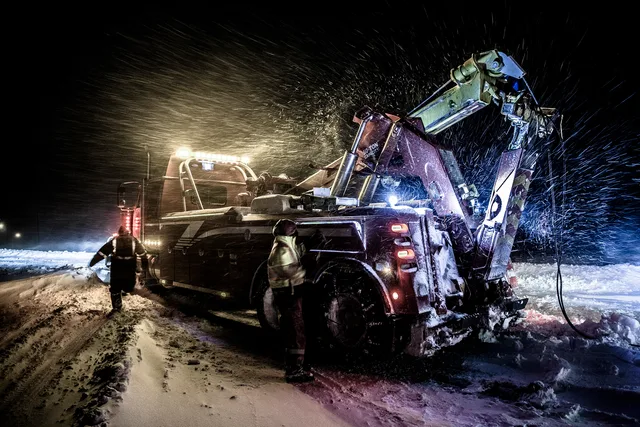
A wheel lift and a set of summer straps will not pull a tractor-trailer out of a Michigan ditch in February. Snow, ice and frozen ground change the physics, and the kit changes with them.
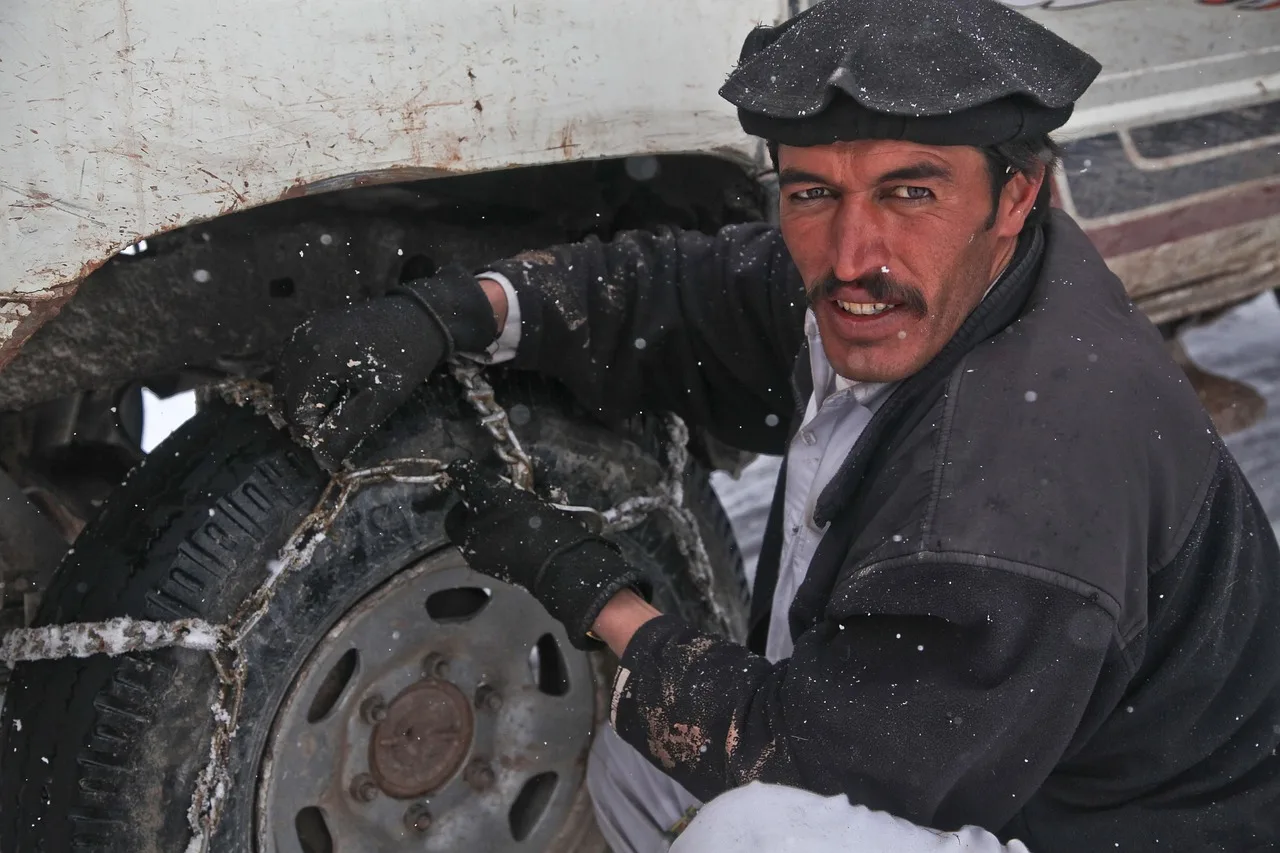
Start with traction. Tire chains for the tow truck, and chains or traction boards for the vehicle being recovered. A snatch block changes the pull angle without repositioning the truck, which matters when the shoulder is ice.
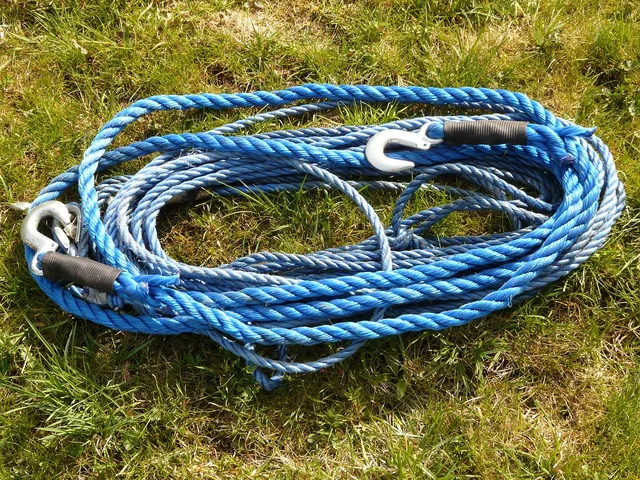
Recovery straps and winch lines must be rated for the load and inspected before each use. Rigging standards for slings, shackles and hooks are set out in 1926.251 - Rigging equipment for material handling. | Occupational Safety and Health Administration.
Carry more than you think you need. A working recovery in a snowbank can consume every strap on the truck, so winter kit includes a winch line extension, a tree saver strap, shackles and a long-handle shovel.
Frozen ground changes anchor points. In a field, a ground anchor may be your only option. On a frozen shoulder the truck itself may slide, so set the parking brake and chock the wheels before you pull.
Keep gear dry. Wet straps freeze stiff and lose strength when ice crystals form inside the weave. Store recovery gear in a heated compartment or a sealed box. If you are building out a truck, the towing company equipment setup should match the worst weather you work in, not the average.
Winter recovery gear table
| Item | Winter use | Notes |
|---|---|---|
| Tire chains | Tow truck traction on ice | Carry spare cross links |
| Snatch block | Change pull angle | Rated for winch line capacity |
| Recovery strap | Kinetic pulls | Inspect for cuts and stiffness |
| Tree saver strap | Anchor around a tree | Never use a chain as a kinetic strap |
| Traction boards | Vehicle self-recovery | Useful on ice and packed snow |
| Ground anchor | Frozen field recovery | Pair with a long winch extension |
| Long-handle shovel | Clear snow from wheels | Keep one in every truck |
OSHA winter safety guidance for tow operators
OSHA winter safety guidance is not one page. It is a set of duties that apply to tow operators working outdoors in cold, ice and traffic, and the ones that matter most are PPE, rigging and hazard assessment.
The PPE standard, 1910.132 - General requirements. | Occupational Safety and Health Administration, requires employers to assess workplace hazards and provide protective equipment for the eyes, face, head, hands and feet. For a tow operator, that gear has to match the winter hazard, not the summer one.
Cold stress is the winter hazard. Frostbite and hypothermia are real risks during a long recovery in a wind, and OSHA guidance directs employers to train workers on cold stress, provide warm break areas and adjust work practices when conditions deteriorate.
Traffic is the other hazard. Winter visibility is poor, and a driver on a snow-covered shoulder is exposed. High-visibility clothing, warning lights and a safe work zone are part of the job.
The same framework covers the summer side of the year. Roadside work in July carries heat illness risk, and the agency's Heat - Overview: Working in Outdoor and Indoor Heat Environments | Occupational Safety and Health Administration page sets out prevention steps for outdoor workers.
Document your training. A short tailgate session on cold stress, rigging and traffic control, logged with names and dates, is the record that shows you assessed the hazard.
Personal protective equipment for extreme cold
PPE in a Midwest winter is a system. The wrong glove is a crushed hand, and the wrong boot is a slip on the ice. Layer for the work, not for the cab.
Start with the hands. Insulated, cut-resistant gloves for winch line and cable work, plus a lighter pair for fine tasks like hooking a chain. Keep a dry spare pair in the truck, because wet gloves freeze.
Footwear needs insulation, a slip-resistant sole and a safety toe. Ice cleats that fit over boots are cheap insurance on a frozen shoulder, and they break, so carry a spare set.
Eye and face protection matters when you are chipping ice or running a pressure washer. Safety glasses with an antifog coating, and a face shield for impact work.
Head and body layers should be high-visibility. An ANSI-rated jacket with reflective striping keeps you seen and warm, and a hard hat with an insulated liner covers head protection in cold.
The OSHA Personal Protective Equipment - Overview | Occupational Safety and Health Administration page is the reference for what employers must provide and pay for. In practice, the company buys the PPE and the driver wears it. Keep a change of clothes in the truck, because hypothermia starts when the work stops.
Tire selection and chain requirements
Tires are the contact point between a tow truck and an icy road, which makes winter tire selection both a safety decision and a cost decision.
Look for a tread compound that stays flexible in cold and a pattern that clears snow. All-season tires are a compromise. In the Upper Midwest, many fleets run dedicated winter drive tires or at least a severe snow-rated tire on the drive axle.
Inspect tread depth before the season. Worn tires hydroplane on slush and lose grip on ice. Check pressure weekly, because cold drops pressure and a soft tire runs hot.
Load and rating guidance for fleets is available from Tire Safety Ratings and Awareness | TireWise | NHTSA. Match the tire to the axle load, especially on a heavy wrecker.
Many state DOTs post chain requirements for mountain passes and severe storms. Midwest chain laws are less common on the plains, but a truck working a snow event should carry chains for the drive axle and practice installing them before the storm. Keep tensioners and spare cross links on board.
When you replace tires, the new vs used towing company equipment tradeoff applies. Used tires save money and cost grip, and on winter drive axles the grip is the point.
Scheduling and dispatch adjustments for winter storms
Winter dispatch is a different job. Call volume spikes, travel times double, and the recovery itself takes longer. A dispatcher who plans for summer will bury the fleet in the first storm.
Build in more time. A 30-minute ETA in July can be 90 minutes in a snow event. Give the customer the range, not the best case, and update when it changes.
Stage trucks near known trouble spots: interstate ramps, bridge approaches, hills and the county roads that drift shut. A truck already in the area saves an hour.
Set a no-solo rule for heavy recoveries. Two trucks, or a truck and a spotter, reduce the chance that the recovery becomes a second incident. This is a standard item in a daily operating checklist during winter.
Screen calls for priority. A stranded family in a travel lane outranks a no-start in a driveway, and police rotation lists and DOT requests get triaged with the same logic.
Manage driver hours. Winter work is slower and colder, and fatigue sets in faster. Rotate drivers, enforce breaks and keep the coffee hot, because a tired driver on ice is the biggest risk in the fleet.
Track the storm. Weather feeds, DOT road condition maps and driver reports should decide where the next truck goes. Dispatch is a moving picture in a Midwest winter, and the fleet that adapts keeps its trucks on the road.
Common questions
How do I keep a diesel tow truck starting in below-zero weather?
Treat the fuel for cold flow, plug in the block heater, and keep the battery and charging system in good condition. A charged jump pack and spare fuel filters cover the morning it still refuses.
How often should I wash the undercarriage in winter?
After every storm cycle, and at least twice a week during heavy salt periods. Salt sits in the frame and brake lines, so the wash is about removing it, not making the truck look clean.
What recovery gear should every winter tow truck carry?
A recovery kit should include:
- Chains
- A snatch block
- Rated recovery straps
- A tree saver
- Traction boards
- A long-handle shovel
- A ground anchor Inspect straps and rigging before each use.
Does OSHA have specific winter towing rules?
OSHA applies general duties: hazard assessment, PPE, rigging standards and cold stress training. The PPE and rigging standards are the ones cited most often for tow work.
Are tire chains required in the Midwest?
Chain laws vary by state and are usually tied to severe conditions or specific routes. Carry chains for the drive axle during snow events and practice installing them before the storm.
How should dispatch change during a winter storm?
Add time to every ETA, stage trucks near trouble spots, triage calls by priority and rotate drivers. A no-solo rule on heavy recoveries prevents a second incident.