Guides
Reading towing companies with a sceptical eye
The towing companies worth studying in 2027 are the ones whose public model tells you how they price a hook, staff a rotation and keep a fleet running.
What to take away
- Nearly every towing company you can research fits one of four groups: contract dispatch, rotation or municipal contract, heavy recovery, and private-property impound.
- The group decides how revenue arrives, who sets the rate, and what equipment the fleet must carry.
- Compare within a group. A heavy recovery fleet is not a benchmark for a light-duty rotation truck.
- Acquisition-led groups change shape yearly, so confirm who owns a name before trusting it.
- RoadOne IntermodaLogistics appears on towing lists but moves containers, not cars.
The four models, and what each one tells you
Place a company in a group before comparing it with your own operation. The group predicts where revenue comes from and who controls the price. Pricing, staffing and insurance follow.
If you are weighing a market entry, this grouping is the starting point. towing company expansion as practitioners see it covers the questions that come next.
The four models
How the money arrives
- Contract dispatch
- a rate per service, set by the network
- Rotation and municipal
- scheduled or permitted call-out work
- Heavy recovery
- job or hourly rate from fleets and insurers
- Private-property impound
- standing agreements plus storage
Operators to study
- Contract dispatch
- Agero, Allstate Roadside Services, Urgently, HONK
- Rotation and municipal
- O'Hare Towing Service, Citywide Towing
- Heavy recovery
- Roberts Heavy Duty Towing, Stepp's Towing & Heavy Transport, B & R Towing
- Private-property impound
- Westway Towing, Parker Towing
What it tells you
- Contract dispatch
- steady volume, limited price control
- Rotation and municipal
- work without marketing, rules attached
- Heavy recovery
- costly equipment, fewer larger jobs
- Private-property impound
- predictable revenue, state lien procedures
[figure 1]
Four towing business models
Motor club networks
- Who calls
- Central dispatcher
- How paid
- Contracted rate per service
- Equipment
- Standard tow truck
- Examples
- Agero, Allstate, HONK
Police rotation
- Who calls
- City or county list
- How paid
- Municipal contract
- Equipment
- Tow truck plus permit
- Examples
- O'Hare, Citywide
Heavy-duty recovery
- Who calls
- Fleet or insurer
- How paid
- Hourly recovery rate
- Equipment
- Rotator and landoll
- Examples
- Roberts, Stepp's, B & R
Private-property impound
- Who calls
- Lot or property owner
- How paid
- Standing agreement
- Equipment
- Tow truck
- Examples
- Not named in text
Contract dispatch operators
Agero, Allstate Roadside Services and Urgently take calls from a central dispatcher and pay a contracted rate per service. Volume is steady and the network sets the price. Drivers are often contractors.
HONK adds a marketplace layer where drivers bid on nearby jobs. Watch it for how bidding moves the rate on routine calls.
AAA Roadside Assistance contracts a national network rather than running its own trucks. Canadian CAA clubs work through affiliated providers.
The contracted rate is the clearest public number for what light-duty roadside work pays. how much to charge for towing company work without the jargon sets out the hook, mileage, winch-out and storage lines.
Rotation lists and heavy recovery
Police rotation companies hold a place on a city or county list. Work arrives without marketing.
The list carries requirements: response times, insurance limits and storage capacity. O'Hare Towing Service and Citywide Towing are long-running rotation-heavy operations.
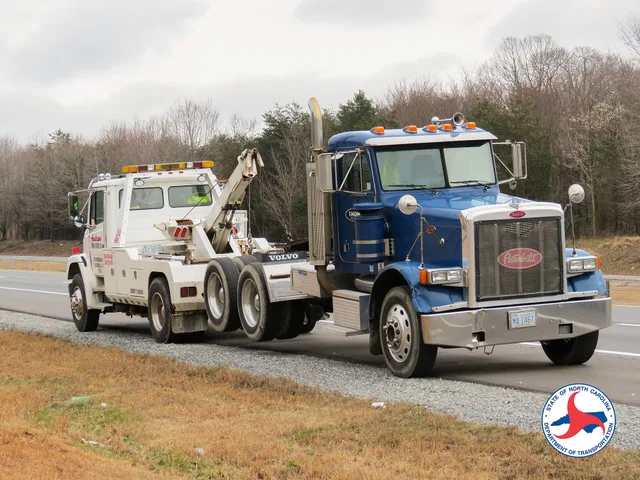
Heavy recovery runs rotators and landoll trailers for trucks, buses and equipment. Miller Industries builds much of what this group operates, so its dealer network maps who runs heavy fleets.
Roberts Heavy Duty Towing, Stepp's Towing & Heavy Transport and B & R Towing sit here. Heavy work bills per job or hour, usually to a fleet or an insurer.
Impound work and the consolidators
Private-property companies tow from lots, apartment complexes and commercial accounts under standing agreements. Revenue is predictable, but it depends on lien and notice procedures your state writes. Ontario licenses operators separately under the Towing and Storage Safety and Enforcement Act.
Westway Towing and Parker Towing are examples built around this work. United Road Towing and Guardian Fleet Services grew by acquiring regional operators, so their footprint shifts and brand names lag behind ownership.
Acquisition-led groups tend to rework driver pay and rosters first. staffing a towing company with people who stay covers what holds a crew together when the owner changes.
RoadOne IntermodaLogistics moves intermodal containers, so it illustrates freight drayage rather than towing economics.
Example: five minutes on a competitor's site
- Find the service area. Rotation companies name cities and agencies; contract dispatchers describe coverage.
- Find the rate structure, including the free storage period and the daily rate that follows.
- Find the fleet page. Truck types decide which calls the company can accept.
- Check the ownership line. Acquisitions rename sites and leave old brand pages live.
[figure 2]
What to check before copying
- Services they list on the website
- What they charge or decline to charge
- How they staff nights and weekends
- Whether they hold a rotation contract
- Rate structureflat hook plus per-mile
- Storage and fuel surcharge revenue lines
A wheel-lift truck and a flatbed are not interchangeable. The difference between flatbed and wheel-lift configurations decides whether an electric vehicle can be moved at all.
What changes by 2027
Consolidation continues. Buyers add regional fleets instead of building depots. Dispatch marketplaces push routine call prices down and surge prices up.
Electric vehicles shift more light-duty work onto flatbeds, because regenerative braking and low ground clearance limit wheel-lift tows.
Driver pay stays the largest controllable cost. The BLS Occupational Employment and Wage Statistics tables publish estimates by occupation and metro area.
Dispatch software decides how fast a call becomes an invoice. Reviewing towing company software compares the tools that handle that step.
Common questions
Which companies should I study first?
Start with the group closest to your own trucks. A light-duty rotation fleet studies O'Hare Towing Service. A heavy recovery operation studies Stepp's Towing & Heavy Transport.
How do I spot a rotation company?
Read the website. Rotation companies name the cities and agencies they serve and often publish response-time commitments. Contract dispatchers describe coverage instead.
Do FMCSA rules apply to every tow?
No. They cover interstate commercial motor vehicle operations. Applicability depends on the vehicle and load, and intrastate towing falls to your state DOT or utility commission.
Where do I find driver wages?
The BLS OEWS tables give estimates by occupation and metro area. Use them as one input, then build your own cost per driver-hour.