Guides
Towing company insurance costs and the cover behind them for first-year owners
Towing company insurance costs depend on what you haul, where you run and who drives, so first-year owners should price coverage before buying the truck.
What to take away
- Commercial auto pays when the tow truck itself causes a crash. A light-duty wheel-lift typically costs $3,000 to $8,000 a year per truck, priced on gross vehicle weight, radius of operation and driver records.
- Garagekeepers pays for a customer's car while it sits on your lot or hook. At a $50,000 limit brokers typically quote $1,000 to $4,000 a year, and it is the line most first-year owners underbuy.
- Cargo coverage is usually written as a limit per vehicle, not per load, at about $500 to $2,000 a year per truck, so a heavy-duty hook can outrun a $50,000 limit in one call.
- On-hook cargo, general liability and environmental cleanup are separate lines, and a policy that names one does not carry the others. A pollution endorsement typically adds $500 to $2,500, and general liability at a $1M/$2M limit usually runs $600 to $2,500.
- FMCSA sets a $750,000 public liability floor for interstate for-hire carriers running vehicles over 10,001 pounds. Ask your state DOT, your city licensing office and a licensed commercial broker what your operation must file before you sign a truck note.
This is general information about how towing coverage is structured, not advice on what your business must carry. Limits, filings and endorsements vary by state, by city and by the contracts you sign. Confirm current requirements with your state DOT, your city licensing office and a licensed commercial insurance broker.
The four lines a first-year tow operation buys
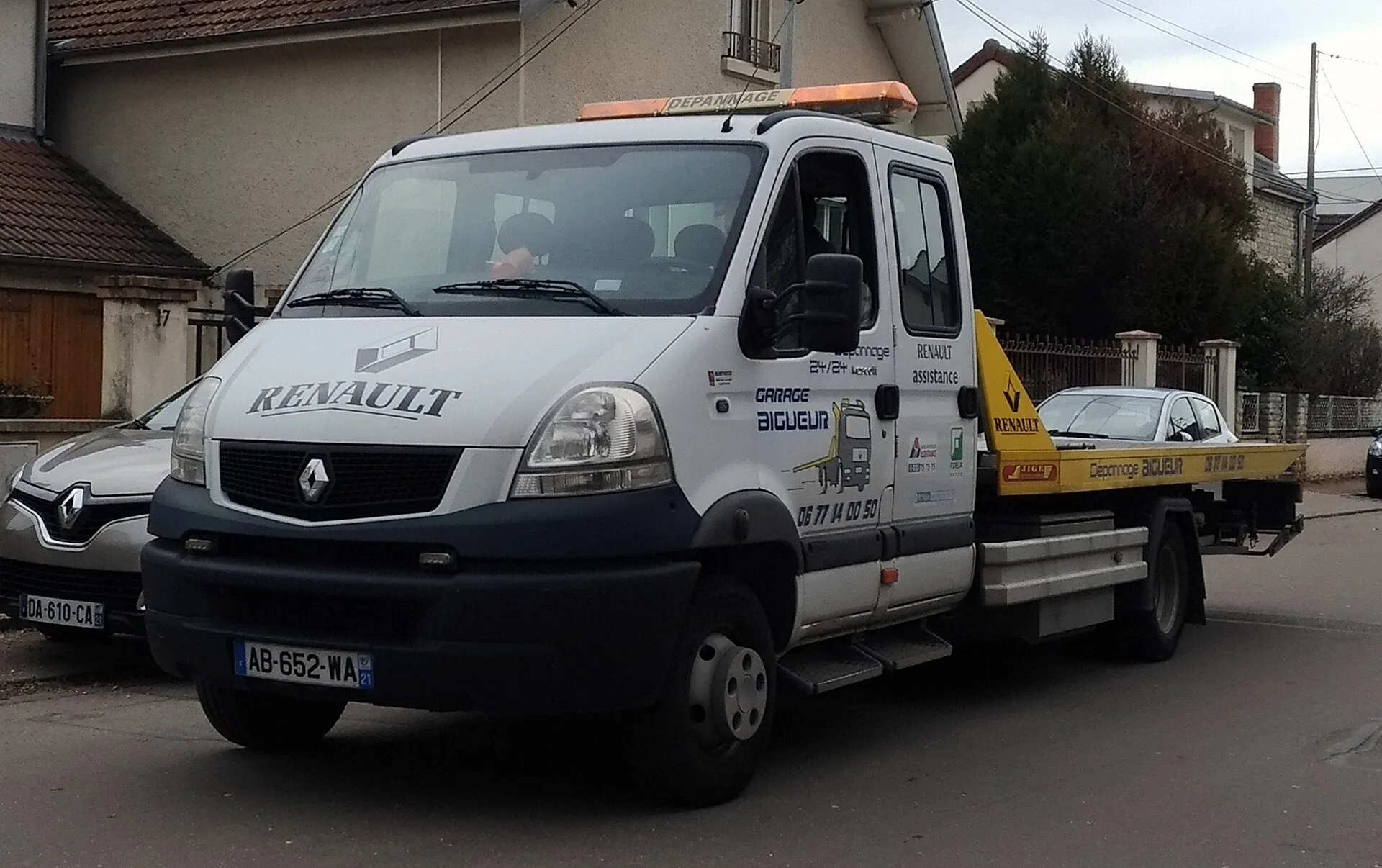
Commercial auto. This covers the tow truck. It is the line a lender asks about first, because a financed wrecker is collateral. In most markets a light-duty wheel-lift runs $3,000 to $8,000 a year per truck.
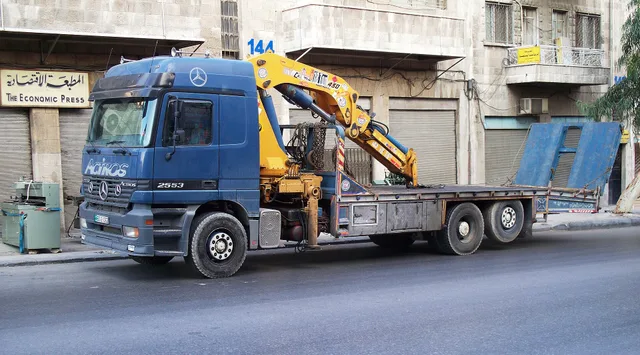
A medium-duty flatbed typically falls between $6,000 and $12,000, and a heavy-duty rotator can pass $25,000. Rating turns on gross vehicle weight, how far you run, what you haul and the motor vehicle records of every driver you list. Progressive Commercial and Canal Insurance Company both sell commercial auto for tow trucks.
General liability. This covers slips on your lot, damage to a building you back into, and the premises side of a customer injury. It does not cover the customer's car. A small yard with a $1M/$2M limit typically pays $600 to $2,500 a year.
Garagekeepers. This covers vehicles in your care, custody and control, on the hook, in the yard and in the impound row. A light-duty operator who tows five cars a day holds a lot of other people's property at any moment. At a $50,000 limit, brokers commonly quote $1,000 to $4,000 a year.
Nationwide and Berkshire Hathaway GUARD both sell garagekeepers coverage for small lots.
On-hook cargo. This covers the vehicle you are towing when something goes wrong in transit. It is written per vehicle, so the limit that fits a wheel-lift car does not fit a heavy-duty hook. Premiums typically run $500 to $2,000 a year per truck at a $50,000 to $100,000 limit.
What drives the premium
Weight class is the first lever. A light-duty wheel-lift and a medium-duty flatbed are different rating classes even when both run the same city. Miller Industries owns Jerr-Dan, Century and Vulcan, three of the body lines that sit on those chassis, and the body class drives the rate.
Radius is the second. Local work prices differently from long-haul, because the exposure per mile changes. A yard bidding 25-mile city calls does not rate like one running 200-mile highway recoveries.
Driver records are the third, and the one owners control fastest. Every driver you add is a rating factor, and a single moving violation can move the number. Tell the broker before you hire, not at renewal.
Haul type is the fourth. Flatbed, wheel-lift, heavy-duty recovery and impound work carry different loss histories. Tell the broker which ones you actually do, because a policy written for one and used for another is a claim waiting to be denied.
The lines owners forget
Environmental cleanup covers a diesel spill, a coolant release or a hydraulic line that lets go at a scene. Many general liability policies exclude pollution outright, so it is a separate purchase, typically $500 to $2,500 a year depending on the spill limit you buy.
Garagekeepers has a care, custody and control trigger, and it usually excludes the customer's personal property inside the vehicle. A laptop left on the passenger seat is a separate conversation.
Uninsured and underinsured motorist coverage protects your driver when the other party has no policy. It is cheap relative to the loss it covers, often $100 to $300 a year per truck.
What to ask before you sign
- Which limits does my state DOT require me to file, and at what amount? FMCSA's interstate floor for a for-hire carrier over 10,001 pounds is $750,000.
- Does my city licensing office or police rotation agreement set a higher limit than the state?
- Is garagekeepers written per vehicle or per location, and does it cover the impound row?
- Does the on-hook cargo limit match my heaviest truck, not my average one?
- Are all drivers listed by name, including the part-timer who covers weekends?
- Does the policy exclude pollution, and what does a cleanup endorsement add? Typical add: $500 to $2,500 a year.
- What is the deductible on each line, and can I cover it in a slow month? Common deductibles run $1,000 to $5,000.
Where the money goes, side by side
Where the money goes
| Cost line | Behavior in a towing and roadside assistance company | Watch for |
|---|---|---|
| Buying and maintaining tow trucks | Easy to defer and expensive to defer too long | No reserve for replacement |
| Commercial auto, light-duty wheel-lift | Typically $3,000 to $8,000 a year per truck | A heavy-duty hook written on a light-duty rate |
| Commercial auto, heavy-duty recovery | Typically $12,000 to $25,000 a year per truck | Rotator work priced as a standard wrecker |
| General liability, $1M/$2M | Typically $600 to $2,500 a year | Assuming it covers the customer's car |
| Garagekeepers, $50,000 limit | Typically $1,000 to $4,000 a year, or $100 to $400 per vehicle | Personal property inside the car |
| On-hook cargo | Typically $500 to $2,000 a year per truck | Limit written per vehicle, not per load |
| Environmental cleanup endorsement | Typically $500 to $2,500 a year | Pollution excluded from general liability |
| Insurance and filings | Fixed once written, repriced at renewal | Limits set for the truck you used to run |
| Wages and the owner's time | Flexes less than it looks | Unpaid drive and quote time |
| Variable job costs | Rise and fall with the work | Supplier increases absorbed quietly |
Worked example: sizing a policy to a two-truck yard
Say you run a Ford F-450 wheel-lift and a medium-duty flatbed on an Isuzu NPR-HD chassis. Write your own figures into these variables, or start from the typical 2026 ranges:
Sizing a two-truck yard
- A = annual commercial auto premium for both trucks, typically $6,000 to $12,000
- B = general liability premium at $1M/$2M, typically $600 to $2,500
- C = garagekeepers premium at the limit your city requires, typically $1,000 to $4,000 at $50,000
- D = on-hook cargo premium at the flatbed's limit, typically $500 to $2,000 per truck
- E = environmental cleanup endorsement, typically $500 to $2,500
- F = total deductibles you could pay in one month, commonly $1,000 to $5,000 per line
Your annual insurance line is A + B + C + D + E, which with those ranges lands between roughly $9,000 and $22,000 for the pair.
Compare F against one average month of revenue. If F is larger than a month you would call normal, you are one incident away from a cash problem, and the fix is a larger reserve or a lower deductible, not a smaller policy.
Reference: fmcsa.dot.gov guidance.
Reference: osha.gov guidance.
Reference: archive.ada.gov guidance.
Common questions
Does the customer's own insurance pay for damage I cause while towing?
Sometimes, and you cannot count on it. Their carrier may pay and then pursue you, and garagekeepers or on-hook cargo is what responds on your side. Report every incident to your broker the same day, in writing.
Can I add a driver to the policy mid-month?
Usually yes, and you should before that driver takes a call. An unlisted driver can void coverage on a claim. Give the broker the license number and motor vehicle record at hire, not at renewal.
Is the cheapest quote the right one?
Only if the limits match what your state, your city and your rotation contract require. A low premium on a limit that is half the required amount is a filing violation plus an uncovered claim. Compare limits first, price second.
Do I need coverage before I have a truck?
You need it before the truck moves under your authority. Some owners bind commercial auto the day the note is signed and add garagekeepers once the yard opens. Ask the broker to stage the policy to your actual start date.