Guides
Getting on a Texas police towing rotation list
A Texas police rotation slot is contract work, not a license, and each city sets its own insurance, inspection, equipment and response rules.
What to take away
- Getting on a Texas police towing rotation list is contract work awarded city by city. Texas has no statewide list.
- Houston and Dallas each run their own application, inspection and rate schedule. A packet copied from another market gets rejected.
- The Texas Tow Truck Act floor for tow truck liability insurance is $300,000 combined single limit. Houston rotation contracts often require $1,000,000, and Dallas contracts commonly require $500,000 to $1,000,000.
- Inspection covers lights, brakes, tires, winch and cable, safety chains, and the registration and insurance on that specific truck. Texas also requires an annual commercial vehicle inspection.
- TDLR charges $75 per tow truck permit. City application or permit fees typically run $100 to $500 per truck, and re inspection fees $50 to $150.
- Application packets come from the department, not from a template. Ask for the current packet, fee schedule, inspection form and opening date, and keep the reply in writing.
How a Texas rotation list actually works
A police rotation list is a roster a department calls in order when a wreck, disabled vehicle or abandoned car needs a tow. Departments define zones, truck classes and call types, then add approved companies for a set term.
How a Rotation Call Moves
- Wreck, disabled or abandoned vehicle reported
- Department calls next company on roster
- Company rolls or call passes to next name
- Repeat misses remove company from list
Dispatch works down the list. If your company is next and cannot roll, the call passes to the next name.
The Texas Department of Transportation handles state highway incidents and freeway service patrol contracts. City police departments run their own lists inside city limits. A company can hold spots in several cities if it meets each one's rules.
Rates are usually capped by city ordinance or a contract schedule. Revenue then depends on volume, response speed and how many trucks you keep available. Operators who treat a rotation spot as a favor rather than a contract lose it.
Cities use the list to control who touches crash scenes. Thin paperwork means another company gets the call.
The Texas Department of Licensing and Regulation (TDLR) issues tow truck permits under the Texas Tow Truck Act, Occupations Code Chapter 2308. A permit is separate from a city rotation slot. You need both to work rotation calls in most cities.
Application steps for Houston and Dallas
Houston Police Department and Dallas Police Department both take applications on their own schedules, and both want a full packet rather than a single form. Confirm the current process with each department's towing or vehicle storage unit before you mail anything.
Rotation Application Packet Steps
- Request current application packet from police towing unit
- Complete application with USDOT and Texas DOT numbers
- Attach proof of insurance and surety bond
- Submit inspection paperwork for every truck
- Pay fee, then wait for review and inspection
Houston
Houston's rotation is run by the Houston Police Department under the Houston Code of Ordinances chapter on towing and vehicle storage and under the tow contract the city awards. The department's towing and vehicle storage unit issues the packet. Unit names and inboxes change, so the current packet is the reliable source for the contact.
- Request the packet in writing from the unit the department names for towing and vehicle storage.
- Complete the city application and accept the published rate schedule in writing.
- Attach insurance certificates at the limits in the current ordinance, plus the bond if the packet calls for one.
- Submit registration and inspection paperwork for every truck you want listed.
- Pay the fee. Then wait for the inspection appointment.
Dallas
Dallas runs its list under the Dallas City Code and its own vehicle storage and tow contract, which sets the rate schedule and call handling rules. The Dallas Police Department reviews the packet.
- Request the packet in writing from the Dallas Police Department towing and vehicle storage unit, and ask which code section the application cites.
- Complete the application with ownership, USDOT and Texas DOT details for each truck.
- Attach proof of insurance at the city limits, plus the bond or letter of credit if the contract requires one.
- Submit registration and inspection paperwork for every truck.
- Pay the fee. Then wait for review and an inspection date.
Both the code and the contract are public records. Ask for the current code section, the contract number and the rate schedule in writing, then read the rate schedule before you agree to it. A number printed in an old packet can be out of date.
Expect a typical 4 to 12 weeks from packet submission to inspection appointment. It runs longer when the department is between application windows.
Houston runs a large, zone based rotation and expects applicants to show storage capacity, insurance and trucks that pass inspection. Dallas reviews against its own ordinance and contract terms, including rate schedules and call handling rules. Neither city accepts a generic packet copied from another market.
Get your federal house in order first. A tow truck used in interstate commerce, or one above certain weight thresholds, needs a USDOT number, and the FMCSA guide on USDOT numbers explains who must register. New carriers can follow the FMCSA registration steps before a city will look at the packet.
Many cities also require a surety bond or letter of credit to guarantee performance. The Small Business Administration outlines how surety bonds work for small firms, which helps when a contract names a bond amount you have to meet.
For rotation work, keep the records the contract names: the current insurance certificate, the inspection report for every listed truck, and the bond if the city requires one. Our guide to towing company licensing requirements covers the documents new owners should assemble before applying for city work.
TDLR's tow truck permit fee is $75 per truck. City application or permit fees typically run $100 to $500 per truck as of 2026. Ask each department for its current fee schedule before you send a check.
Insurance minimums Texas cities set
Texas law sets a floor for tow truck insurance. The Texas Tow Truck Act, Occupations Code Chapter 2308, requires at least $300,000 combined single limit liability coverage for tow trucks.
The state's general auto liability minimum is 30/60/25: $30,000 per person, $60,000 per accident for bodily injury, and $25,000 for property damage. Cities routinely set higher limits for rotation work, and a contract can add cargo, on hook and garage keepers coverage on top of liability.
State Floor vs City Rotation
State floor
- Auto liability
- State minimum
- Cargo
- Not always required
- On hook
- Not always required
- Garage keepers
- Not always required
- Surety bond
- Not always required
Common city rotation
- Auto liability
- Higher by ordinance
- Cargo
- Often required
- On hook
- Frequently required
- Garage keepers
- Required if storing
- Surety bond
- Some cities require
| Coverage type | State floor | Common city rotation requirement |
|---|---|---|
| Auto liability | $300,000 combined single limit for tow trucks; general auto minimum 30/60/25 | $500,000 to $1,000,000 combined single limit; Houston contracts often $1,000,000 |
| Cargo | Not always required | Often required, typically $50,000 to $100,000 |
| On hook | Not always required | Frequently required, typically $50,000 to $100,000 |
| Garage keepers | Not always required | Required when you store vehicles, typically $100,000 to $500,000 |
| Surety bond | Not always required | Required by some cities, typically $10,000 to $50,000 |
Houston and Dallas both expect certificates naming the city as an additional insured on rotation contracts. A lapsed policy is grounds for immediate removal, and departments check coverage dates at renewal.
Do not guess at limits. Read the current ordinance or contract schedule, then ask your agent for a certificate that matches it exactly. Underinsured trucks fail review even when everything else is in order.
Coverage cost varies by truck class, radius and claims history. Our breakdown of towing company business insurance explains how limits, deductibles and cargo coverage affect what first year owners pay.
As of 2026, a single light duty tow truck with $1,000,000 liability and cargo coverage typically costs $8,000 to $15,000 a year in Texas, depending on radius and claims history.
What inspectors check
A rotation inspection goes past a standard safety check. Cities want proof the truck can clear a crash scene without damaging vehicles or blocking traffic.
Rotation Inspection Checklist
- Lights, brakes and tires
- Winch and cable condition
- Safety chains and attachment points
- Wheel lift or flatbed operation
- Registration and insurance match
- Cones, flares, vest, extinguisher, spill kit
Inspectors review lights, brakes, tires, winch and cable condition, and safety chains. They check wheel lift or flatbed operation, attachment points, registration and insurance, and that the truck matches the class on your application. They also check the annual Texas commercial vehicle inspection sticker.
A failed inspection usually means a re inspection fee and a delay, not a permanent denial. Fix the listed defects, keep the repair receipts, and bring back the same truck.
Trucks must also carry required safety equipment. The city's tow truck inspection form, issued with the application packet, prints the list. Texas inspectors also work from the North American Standard items used for the annual commercial vehicle inspection.
The gear list usually covers traffic cones, flares or warning devices, a reflective vest, a fire extinguisher, and a spill kit where required. Many cities also require chock blocks, a first aid kit, warning lights and a two way radio. Missing gear fails inspection even if the truck runs well.
Texas Department of Transportation rules apply to towing on state highways and to permitted oversize work. Read them alongside city rules if you want both kinds of call. Federal and state partners publish resources for state and local partners that clarify which enforcement and permitting rules apply to your operation.
Response time and equipment standards
Response time is the standard cities enforce hardest. A rotation call usually expects a truck rolling within a set number of minutes and arriving inside a window set by zone and traffic.
Equipment by Call Type
Call type
- Light duty
- Wheel lift or flatbed
- Medium duty
- Heavier boom and winch
- Heavy duty recovery
- Rotator class capacity
Required equipment
- Light duty
- Medium duty
- Heavy duty recovery
Most Texas city rotation contracts set a 20 to 30 minute arrival window inside the zone as of 2026. Downtown Houston and Dallas zones often require 15 to 20 minutes. Some contracts require a truck rolling within 5 minutes of the call.
Keep a truck positioned to meet the shortest window in your zone. If you hold spots in two cities, do not promise coverage you cannot staff at peak hours.
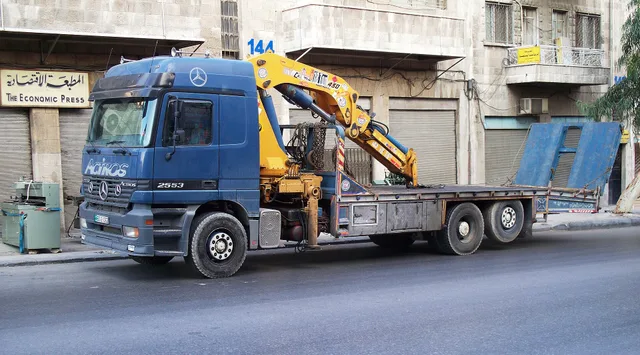
Equipment standards follow the call types you accept. Light duty needs a wheel lift or flatbed. Medium duty needs a heavier boom and winch. Heavy duty recovery needs rotator class capacity and trained operators.
Drivers should hold a commercial driver's license when the truck class requires it, and many cities ask for defensive driving or traffic incident management training. Keep certificates current and on file.
Dispatch matters as much as iron. Answer the police call promptly, confirm the location, and give a realistic ETA. Officers remember companies that communicate and companies that do not.
Holding the spot, and losing it
Getting on a list is easier than staying on it. Cities remove companies for missed calls, failed re inspections, rate overcharges, and complaints from officers or vehicle owners.
Run a monthly self audit against your contract terms. Compare insurance dates, inspection stickers, driver licenses and bond status, then fix anything expiring in the next 60 days.
Keep call logs with times, locations and officer names. If a dispute arises, records decide it. Clear contract language on rates, storage and release procedures prevents most complaints before they reach the department.
Our towing company equipment checklist guide covers how to set rates, storage rules and release terms that hold up when a customer or city questions a bill.
- Insurance certificate current and matching city limits
- Inspection report on file for every listed truck
- Surety bond active if required
- Driver licenses and training certificates current
- Call log updated with times and locations
- Rate schedule posted and followed
- Required safety equipment on every truck
A written routine beats scrambling after a warning letter. Our towing company compliance checklist walks through the records and renewals that keep a rotation spot in good standing.
Common questions
Do I need a USDOT number for a Texas tow truck?
It depends on whether you operate in interstate commerce or meet the weight and passenger thresholds. The FMCSA guide on USDOT numbers explains the test, and many cities ask for the number anyway.
Can one company hold spots on both Houston and Dallas lists?
Yes, if it meets each city's insurance, inspection and equipment rules and can staff both service areas. Each department reviews the application separately.
How long does a rotation application take?
Timelines vary by city and by how often the department opens applications. A typical range is 4 to 12 weeks from packet submission to inspection appointment. It runs longer if you file while a window is closed.
What happens if my insurance lapses while I am on a list?
Most departments suspend or remove the company until coverage is restored and documented. Report changes to the city promptly rather than waiting for a renewal check.
What does it cost to get on a Texas rotation list?
TDLR's tow truck permit fee is $75 per truck. City application or permit fees typically run $100 to $500 per truck as of 2026. Re inspection fees usually run $50 to $150. Insurance is the largest cost: a light duty truck with $1,000,000 liability and cargo coverage often costs $8,000 to $15,000 a year in Texas.