Guides
Towing company equipment: a reviewer's notes
A reviewer's notes on the trucks, beds, winches and rigging a towing company actually buys, and what each choice costs in duty cycle and repair bills.
What to take away
- Match the truck to the duty cycle, not the brochurea wheel-lift that runs 14 hooks a day wears differently than one that runs four.
- Light-duty wreckers split into two families, wheel-lift and flatbed, and the choice follows what you tow most, not what looks best on the lot.
- Winch rating, boom angle and bed length are the three numbers that decide whether a truck can take a job without a second unit.
- Write the expected result and the review date before you sign, so a bad purchase shows up in month three, not year three.
This article covers business decisions about buying, specifying and replacing towing equipment. It is not guidance on operating a tow truck, rigging a recovery or working a roadside scene.
For that, use certified towing and recovery training and the safety authority in your state or province. Licensing, permit, insurance and tax questions go to your state DOT, your city licensing office, the IRS and a licensed attorney or accountant.
Search for towing equipment and you get a list of categories. Search for what to buy and you get a brochure. The gap between those two is where money is lost, because a wheel-lift and a flatbed solve different problems and a rotator solves a problem most companies never have.
The two light-duty families
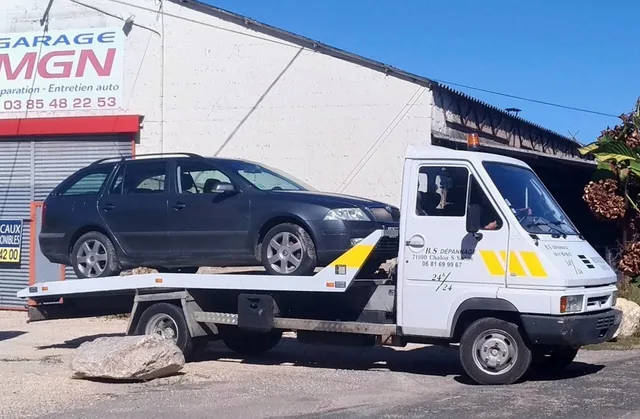
A wheel-lift carries the vehicle on a boom-mounted L-arm that lifts two tires off the ground. It is fast on a parking-lot tow, a repo or a disabled car in traffic, and it leaves the bed free for tools.
It is also the wrong tool for a vehicle with no front wheels, a locked steering column or a wrecked suspension.
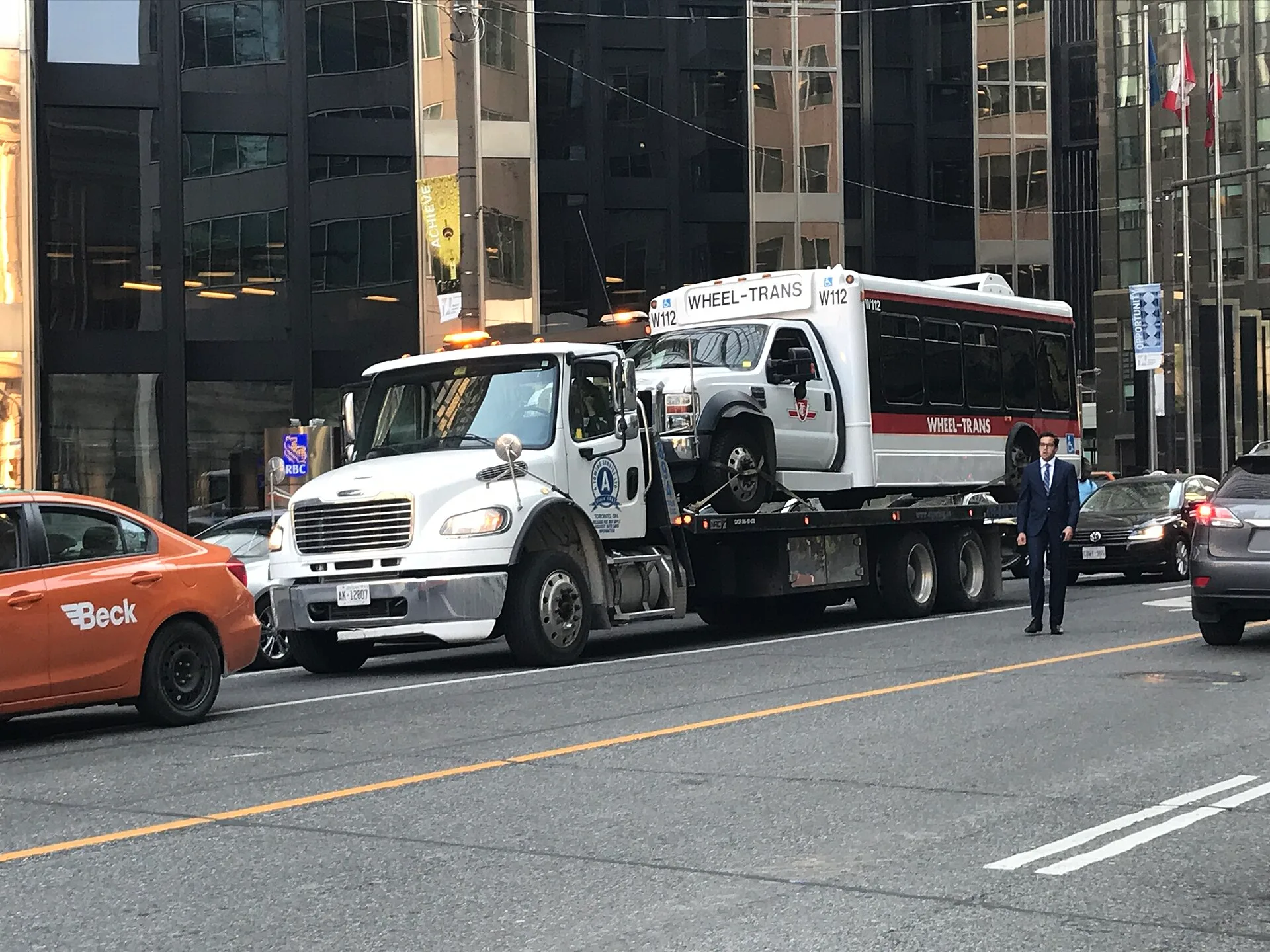
A flatbed rolls the whole vehicle onto a tilting deck. It takes longer to load and costs more per unit, but it handles all-wheel-drive, low-clearance, electric vehicles and anything you cannot drag by two tires. Most light-duty fleets end up with both, and the ratio is a demand question, not a preference question.
Typical asking prices, which move with the chassis, the body and the hours on the unit, are a starting point only. Used light-duty wheel-lift trucks commonly list between $35,000 and $75,000. Used flatbeds commonly list between $45,000 and $90,000. New light-duty units commonly run from $110,000 to $160,000.
The named builders in this class are well established. Miller Industries owns the Century, Vulcan, Chevron and Holmes brands and builds wreckers and carriers across all duty classes. Century's light-duty line includes the 10 Series wheel-lift, Vulcan builds the 810, Chevron builds the MTC-40 carrier, and Holmes is known for the 440.
Jerr-Dan, part of Oshkosh Corporation, builds the MPL and HPL wheel-lift lines, including the MPL-NG, and the steel and aluminum carrier beds. Dynamic Towing Equipment and Manufacturing builds the DYNA line of wheel-lifts, flatbeds and rotators, and sells it under model codes that change with the chassis and duty class.
NRC Industries builds sliding rotators and heavy wreckers. Zacklift builds underlift and wheel-lift units for medium-duty chassis.
What the numbers on the spec sheet mean
Boom rating is the lifting capacity at a stated angle, and it falls as the boom extends. On a light-duty wheel-lift the boom is commonly rated between 3,000 and 6,000 pounds at 10 degrees. The same boom at 45 degrees is a fraction of that figure.
A heavy wrecker's main boom commonly rates from 25,000 to 50,000 pounds at 10 degrees. Winch line pull is the first-layer drum rating, and it drops with each additional layer of cable.
A light-duty carrier winch is commonly rated at 8,000 pounds on the first layer. A heavy recovery winch commonly rates between 20,000 and 50,000 pounds on the first layer. Recovery winches commonly cost from about $1,000 for a light-duty unit to $8,000 or more for a heavy worm-gear unit.
Bed length and deck capacity decide what a flatbed can carry. Steel and aluminum carrier beds for light duty are commonly 19 to 21 feet long. A 21-foot bed is what a crew-cab pickup or a full-size SUV needs to sit without overhang.
Rear axle and tire rating decide whether the load is legal on the road.
Read the rating at the angle and extension you will actually use. A boom rated at 8,000 pounds at 10 degrees is not an 8,000-pound boom at 45 degrees, and the difference is where a truck gets overloaded.
The same discipline applies to the truck you already own. New versus used towing equipment turns on hours and corrosion, not on the year on the title, and a used unit with a documented service history often beats a new one on cost per hook.
Medium-duty and heavy-duty choices
Medium-duty wreckers sit on Class 6 and 7 chassis and handle box trucks, buses, motorhomes and loaded trailers. The step up is usually a chassis decision before it is a body decision, because the body you can mount is limited by the front and rear axle ratings on the chassis.
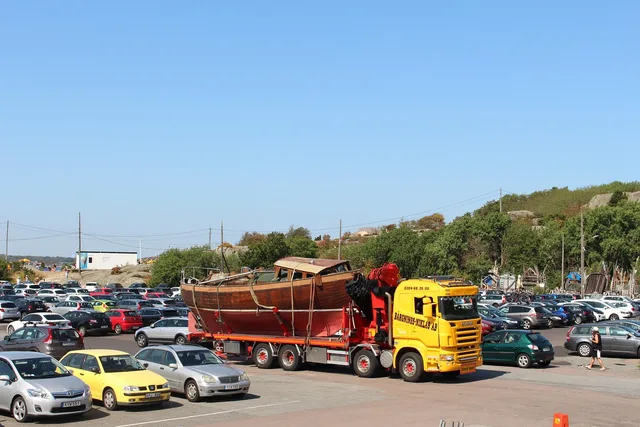
Heavy-duty wreckers and rotators are a different business. A rotator can lift and hold a load that a conventional wrecker cannot, which is why it gets the highway calls that pay the most and why it sits idle the most.
Typical new prices run from about $400,000 to $700,000 for a heavy wrecker. A rotator commonly runs from $700,000 to $1,200,000, with capacity and chassis driving the spread.
Before any of this, check what your state DOT requires for the weight class you are buying into, and what your insurer requires for the work you intend to do. Neither answer is universal.
Winches, rigging and the consumables
The winch is where duty cycle shows first. A worm-gear winch holds a load without brake creep and tolerates heat, which suits recovery work. A planetary winch is faster and lighter, which suits hook-and-go towing. Ramsey and Warn both build recovery winches used in this trade, and the choice follows how often the winch runs, not how it looks.
Rigging is a consumable with a replacement interval. Daily inspection before use is the baseline. ASME B30.9 sets a periodic sling inspection at intervals not exceeding 12 months in normal service, and more often in severe service.
Many towing fleets replace synthetic web slings and shackles on a 12-month cycle. Chains are commonly replaced after 12 months of heavy service, or sooner when a link shows wear. A full set of straps, shackles and blocks for one light-duty unit commonly runs a few hundred dollars, which is small next to the truck.
Slings, shackles, chains, straps and snatch blocks all carry a working load limit, and every one of them needs a documented inspection. The FMCSA cargo securement rules are the reference point for interstate work, and your state DOT sets what applies inside the state.
Yard and shop safety sits with OSHA. Its safety management guidance describes a program that finds and fixes hazards before an inspection or an injury does, which is the same logic you want on the equipment itself.
Storage, impound and the yard
Impound work adds equipment the towing side does not need: a secure lot, a gate and camera system, a fence rated for the vehicles you hold, and software that ties a vehicle to a hold, a release and a lien.
The lot is a capital item and a liability item at the same time, and the rules that govern it come from your city licensing office and the agency that issues your rotation or impound agreement.
Dispatch and impound software is a real line item. The named products in this trade include Towbook, Dispatch Anywhere by Beacon Software, TRAXERO and Ranger SST. Pricing is quoted per truck or per user and changes, so get a current quote rather than a figure from an article.
Records, cost and the replacement decision
Every unit needs a file: purchase documents, warranty, repair history, inspection records and the assigned operator. The IRS recordkeeping guidance is the baseline for what to keep and for how long, and your accountant sets the depreciation schedule.
Cost per hook is the number that decides repair or replace. Take total cost of the unit for the period:
- payment
- insurance
- maintenance
- tires
- fuel
- the operator's hours
Divide that total by the hooks that unit ran.
Compare that against the same figure for a replacement. The SBA business guide covers the planning, finance and hiring side of that decision.
| Signal | What it usually means | First check |
|---|---|---|
| Repeat repairs on the same system | Unit is past its economic life | Cost per hook versus replacement |
| Winch or boom derated after inspection | Capacity no longer matches the work | Manufacturer repair guidance |
| Unit idle more than it runs | Bought ahead of demand | Rotation list and contract volume |
| Operator avoids one truck | Ergonomic or handling problem | Ask the operator before the mechanic |
Worked example: a two-truck light-duty start
Take a company that runs 60 light-duty calls a month, split 40 wheel-lift and 20 flatbed. It buys one used wheel-lift and one used flatbed rather than one new combination unit, because the two jobs do not overlap and one truck cannot cover both.
Use your own figures, but here is a worked set.
Wheel-lift payment: $1,100 a month.
Flatbed payment: $1,250.
Combined insurance: $900.
Maintenance reserve: $500.
Fuel: $1,200.
Operator hours across both units: $3,600.
Total monthly cost is $8,550. Divide by 60 calls to get a cost per call of $142.50.
If that number is above what your market pays for a light-duty hook, the fleet is too big for the demand, and the fix is more calls or fewer trucks.
The review date goes in the file before the trucks arrive. At 90 days, compare cost per call against the plan and against the number of calls the rotation list actually delivered.
Common questions
Do I need a rotator to get heavy-duty work?
No. Heavy-duty work comes from the rotation list, a contract or a recurring fleet account, and a conventional heavy wrecker covers most of it. A rotator earns its place when the work already exists and a second unit cannot do it.
Wheel-lift or flatbed first?
Count your last 100 calls and see how many needed a flatbed. If it is under a quarter, start with a wheel-lift and subcontract the rest. If it is over half, start with the flatbed.
How often should equipment be reviewed?
Review cost per hook monthly and do a full unit review at least once a year, or sooner when a unit fails inspection, a major repair lands, or a contract changes. Put the next review date in the file when you close the last one.
What should a new owner avoid?
Avoid copying another company's fleet mix without its call volume. That mistake shows up as idle capital, and it is hard to reverse once the payment starts.
![[Hurricane Katrina] Pass Christian, Miss., January 17, 2006 -- Wrecker driver Johnny Hogan looks on as a used wrecker donated by the California Tow Truck Driver's Association is delivered. Mr. Hogan lost his wrecker due to Hurricane Katrina. Mark Wolfe/FEMA. Should a towing company buy new or used equipment for owner-operators](/covers/new-vs-used-towing-company-equipment-cost-guide-640.webp?v=96426914)