Guides
Chicago Towing and Roadside Assistance Company Operations
Towing and roadside assistance company operations in Chicago winter: snow route bans, city sticker checks, downtown permits, and police rotation calls.
What to take away
These notes cover towing and roadside assistance company operations through a Chicago winter, from snow route bans to sticker checks and permit paperwork.
- Chicago's snow route parking ban starts at two inches of snowfall, and cars can be towed with no warning ticket.
- The overnight ban on 107 miles of main streets runs December 1 through April 1 whether or not it snows.
- A missing city sticker is a common reason private lots call for a tow, so photograph the windshield and the lot sign before hooking.
- Downtown work needs a public way use permit, often a surety bond, and a tow truck permit for each vehicle.
- Rotation-list work lives and dies on response time and clean paperwork, not on the contract you signed.
Snow route towing and the winter overnight ban
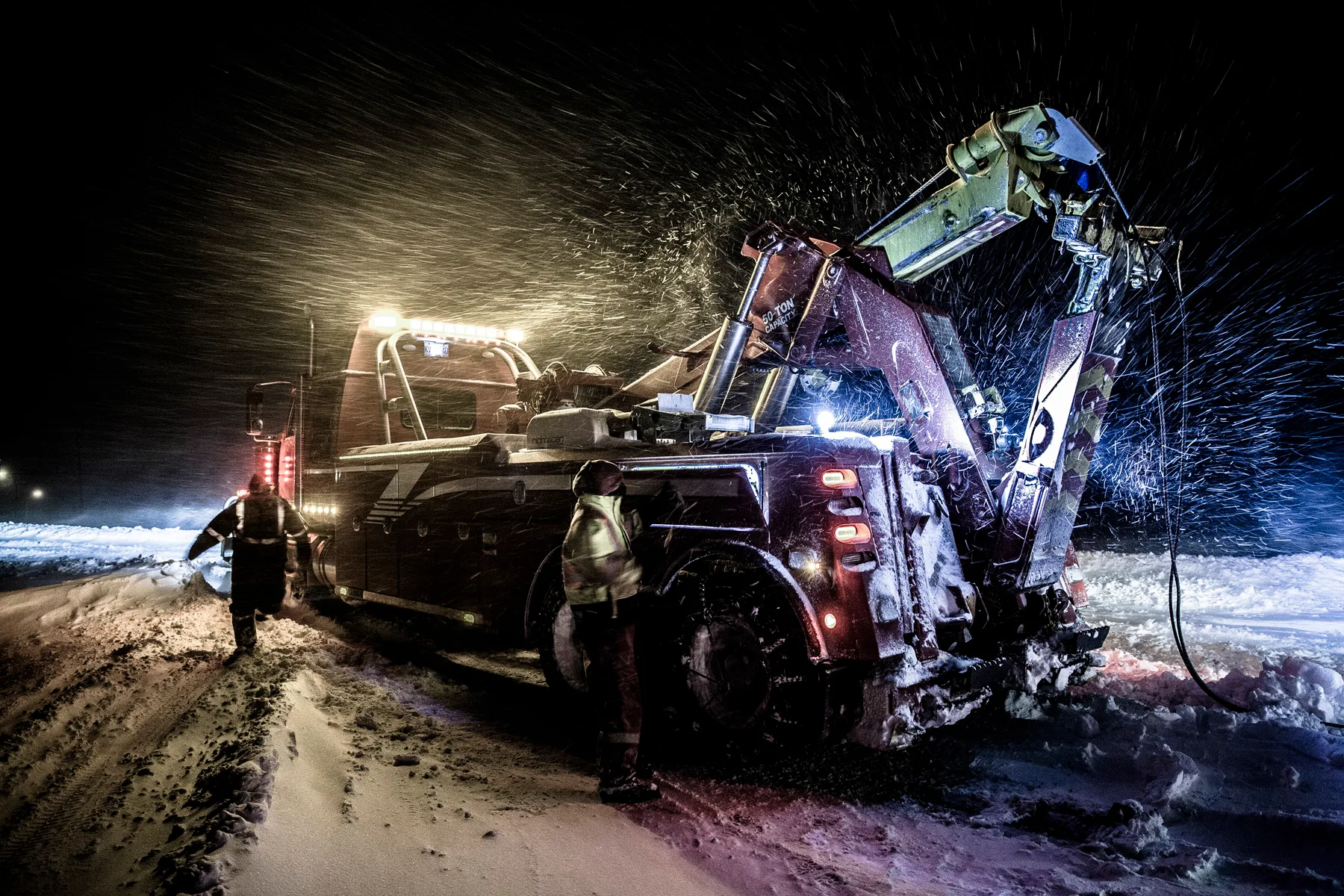
Chicago's snow route rules begin at two inches of accumulation under Chicago Municipal Code Chapter 9-64. Streets and Sanitation declares the ban, and cars left on designated arteries go to a city pound without a warning ticket. Dispatch should hold the current route list, not last winter's.
Snow Route Winter Rules
- 2 inchessnow route ban starts
- Dec 1-Apr 1overnight ban, 107 miles
- 3 a.m.dry-night hook legal
- After towreport to 311 or police
The overnight ban is the part that catches out-of-town drivers. From December 1 through April 1, parking is barred on 107 miles of main streets regardless of weather. A 3 a.m. hook on a dry night is legal. Flag those addresses in dispatch so a driver does not burn a call arguing.
Vehicles removed under the ban go to a pound or a licensed storage yard, and the company reports the move to 311 or the police as the city requires. Confirm the current reporting procedure with the Department of Streets and Sanitation before the first storm.
Winter also spikes private lot calls. Snow hides stall lines and signs, so the driver photographs the stall and the sign before hooking. That photo set is the whole defense if the owner disputes the tow.
A tow truck permit does not exempt a wrecker from the ban. Idling on a snow route while waiting for work draws a ticket like any other vehicle.
City sticker checks before a private lot hook
A missing or expired Chicago wheel tax sticker is one of the most common reasons a private lot calls for a tow. The wheel tax lives in Chicago Municipal Code Chapter 3-56, and the sticker shows the vehicle is registered with the city. Check the sticker, the plate, and the lot signage before the car moves.
Chicago requires the sticker for most vehicles parked on city streets more than 30 days. A car without one can be ticketed, and in some private lot cases towed. Document the violation with a time-stamped photo of the windshield and the lot sign.
That file is not optional. Photos, the lot's written authorization, and the driver's log are what a judge reads. Run the same discipline through the daily operating checklist crews work before every shift.
Sticker status also affects release. An unpaid city ticket follows the vehicle, so some lots require the owner to clear city tickets before the gate opens. Know which rule your lot contract sets before you promise a release time.
Keep the lot's written authorization on file. Without it, a private property tow can be treated as theft. The sticker check is one page in a compliance file that also holds insurance, licenses, and lot agreements.
Downtown permits and the surety bond
Downtown rules are stricter than neighborhood rules because curb space is scarce and traffic never clears. A truck blocking a lane or a loading zone without a permit gets ticketed or impounded. Certain downtown work needs a public way use permit.
Downtown Permit Sequence
- Register business with city and state
- Obtain public way use permit
- Post surety bond if required
- Pass city tow truck inspection
- Carry permit and insurance in truck
Start with the Department of Business Affairs and Consumer Protection. The operator files the public way use application under Chicago Municipal Code Chapter 13-20 and shows proof of insurance. The city reviews the route and the time window before granting it.
A surety bond is often part of the package. The Surety bonds - Small Business Administration explains how a bond pays the public if the operator breaks the permit terms. Companies bidding city work should account for the bond in the bid.
Each truck then needs a Chicago tow truck permit under Chicago Municipal Code Chapter 4-276, which ties the vehicle to the company and requires a passing inspection. The city can revoke it for failed inspections or accumulated violations.
The sequence:
- Register the business with the city and the state.
- Obtain a public way use permit for downtown routes.
- Post the surety bond if the city requires one.
- Pass the city tow truck inspection.
- Carry permit and insurance documents in the truck.
A towing company compliance checklist keeps those five steps on schedule.
State rules and the local layers on top
Illinois sets the floor through the Illinois Commercial Safety Towing Law, 625 ILCS 5/18a: liability insurance and specific handling for non-consensual tows. City and county licensing stack on top. The Illinois Commerce Commission and the Secretary of State handle registration and plate matters, and the Illinois State Police enforce equipment and weight rules on highways.
State vs City vs County Rules
Illinois
- Insurance
- Liability floor
- Permits
- ICC registration
- Equipment
- ISP weight rules
- Plates
- Secretary of State
Chicago
- Insurance
- Proof required
- Permits
- Public way use
- Equipment
- Tow truck permit
- Plates
- Tow truck sticker
Cook County
- Insurance
- May add sticker
- Permits
- County sticker
- Equipment
- Not specified
- Plates
- Not specified
A truck that crosses state lines may also fall under federal motor carrier rules. The Resources for State and Local Partners | FMCSA page shows how federal and state enforcement overlap. Check it before buying a truck for interstate work, not after.
Chicago adds the tow truck sticker, the public way use permit, and the tow truck permit. Cook County may add its own vehicle sticker. Confirm each layer with the issuing office before you bid a contract.
New owners ask how the layers fit together. The towing company licensing requirements guide maps them. A separate towing company license requirements article lists the documents themselves. Neither replaces a call to the city or a licensed attorney.
Winter equipment that survives salt and cold
Chicago winter work punishes equipment. Trucks need winter tires, chains, and a cab heater that actually works. A flatbed needs a winch rated for the loads it pulls and tie-downs that do not freeze in place.
Tread depth, pressure, and tire age decide whether a loaded truck stops on ice. The Tire Safety Ratings and Awareness | TireWise | NHTSA page covers how to check all three. Worn tires put the crew and the customer in the same ditch.
Recovery work requires personal protective equipment. The 1910.132 - General requirements. | Occupational Safety and Health Administration rule covers eye, head, and hand protection. Winter crews add insulated gloves, high-visibility jackets, and non-slip boots.
A starter towing company equipment checklist covers the jump pack, spill kit, cones, flares, and first-aid kit. For Chicago, add a shovel, ice melt, and a tow strap rated for cold. Rinse chains and cables after every storm, because brine shortens their life.
Before the first freeze, pressure-test the hydraulics and switch to cold-weather fluid. Test the battery and alternator, since cold starts drain both. Keep spare fuses and relays in the cab.
Roadside assistance calls beyond the hook
A tow truck also runs roadside assistance calls: jump-starts, lockouts, fuel delivery, tire changes, winch-outs, and battery swaps. Dispatch these by priority, because a lockout pays less than a hook but keeps the truck moving.
Motor club networks and insurers send much of this work. AAA, Agero, and the major insurance roadside programs dispatch through their own apps and portals. Each network sets response-time targets and pays per call, so a missed ETA can cost the contract. Keep the network's app logged in and the driver's status current.
Roadside work needs its own kit: a jump pack, lockout tools, fuel cans, a spare tire kit, and a winch. A separate roadside vehicle can cover more calls per shift than a flatbed, but it cannot clear a snow route. Match the fleet to the contracts you hold.
Police rotation calls and the paperwork behind them
The Chicago Police Department rotation is a list of licensed companies that answer police-directed tows: accidents, disabled vehicles, and snow route removals. Getting on it takes a clean record, proper insurance, and a response time the department can count on. Request the current tow rotation application from the Chicago Police Department's Traffic Division.
Police Rotation Call Steps
- Confirm officer name, star number, unit
- Photograph vehicle from four angles
- Note location, time, weather
- List personal property inside vehicle
- Get tow destination and report number
- Send paperwork to dispatch before leaving
It is not a fixed contract. Slow response, complaints, or equipment failures get a company removed. Track your own response times and keep the dispatch log clean. A written policy for police calls makes every crew follow the same steps.
On scene, the officer controls traffic and sets the destination. The operator documents vehicle condition before hooking, because damage claims follow police tows more often than private ones.
During major storms the department may activate a citywide tow operation and call rotation companies to clear arteries. Plan for long shifts and cold-weather breakdowns, and stage fuel and relief drivers before the storm, not during it.
The rotation call checklist:
- Confirm the officer's name, star number, and unit.
- Photograph the vehicle from four angles before hooking.
- Note the location, time, and weather conditions.
- Secure and list personal property inside the vehicle.
- Get the tow destination and the report number.
- Send the paperwork to dispatch before leaving the scene.
A 2 a.m. call on a snow route near the Dan Ryan usually means a car that spun out and blocked a lane. The driver hooks it, takes it to the police-directed pound, and files the report number and photos by morning. That file is what answers a damage claim six weeks later.
The monthly numbers that signal trouble
Winter hides weak operations. A storm fills the board, and every truck looks busy. Track four numbers monthly and the picture stops lying.
Four Monthly Numbers
- 30 daysunpaid invoice threshold
- 60 daysstop dispatching account
- 4numbers tracked monthly
- 2formulas revenue and cost per truck-hour
Response time from dispatch to arrival, by shift. Unpaid invoices older than 30 days, especially fleet accounts. Revenue per truck-hour against your own cost per truck-hour. Towbacks, meaning vehicles that had to be re-towed or released early.
If revenue per truck-hour falls while fuel and labor climb, the answer is usually pricing or routing, not another truck. If towbacks rise, the answer is training or equipment. If invoices age past 60 days, stop dispatching to that account until it clears.
Write the arithmetic with your own figures: revenue per truck-hour equals billed revenue divided by truck-hours on the road. Cost per truck-hour equals driver pay plus fuel plus maintenance plus insurance, divided by the same hours. The gap is what pays for the next truck.
Common questions
Do I need a city sticker to tow in Chicago?
Yes. A Chicago tow truck needs a city sticker and a tow truck permit. The sticker shows the vehicle is registered with the city and is separate from the state plate.
Can I tow a car from a snow route without a police order?
No. Snow route towing is a city operation. A private operator should not move a car from a snow route unless the city or police direct the tow.
What happens if I work downtown without a permit?
The city can ticket or impound the tow truck, and the operator may lose the permit. The exact penalty depends on the violation and prior offenses, so check with the Department of Business Affairs and Consumer Protection.
How do I join the Chicago Police Department tow rotation?
Request the current tow rotation application from the Chicago Police Department's Traffic Division. Apply with proof of insurance, a clean inspection record, and a licensed tow truck. The department reviews response capability and complaint history before adding a company.