Guides
Towing company startup, one decision at a time
A towing company startup turns on equipment class, dispatch capacity, police rotation rules and cash timing, not on a generic business checklist.
What to take away
- Decide light-duty or medium-duty, wheel-lift or flatbed, before you price anything. The truck sets the jobs you can legally and physically take.
- Price the hook, the loaded mile, the winch-out and the storage day as four separate lines. A single blended rate hides which service loses money.
- Ask your state DOT, city licensing office and police traffic division what a tow business needs before you sign a lease. Rotation lists are issued, not applied for by preference.
- Track cash weekly, not monthly. Fuel, tires, insurance and driver pay leave the account before a fleet invoice arrives.
- Get cargo securement, lien and impound questions answered by FMCSA material, the issuing agency and a licensed attorney. No article settles them.
A towing company is not a service business with a truck attached. It is a dispatch business that sells response time, and the truck is the cost of being able to sell it.
That difference decides everything else: what you buy, who you hire, what you charge, and which jobs you turn down. This guide walks the decisions in the order an owner actually faces them.
It covers business structure and money questions only. It gives no instruction on operating a tow truck, rigging a recovery, or working a roadside scene. Those belong to certified towing and recovery training and your state or provincial safety authority.
Light-duty or medium-duty first
Most new towing companies start light-duty because the truck costs less and the calls are more frequent. Light-duty means passenger cars, SUVs and light pickups. Medium-duty reaches box trucks, small buses and loaded commercial vans.
Light-Duty vs Medium-Duty
Light-Duty
- Vehicles
- Cars, SUVs, light pickups
- Truck cost
- Lower
- Call frequency
- More frequent
- Licence
- Basic class
- Startup advice
- Start here
Medium-Duty
- Vehicles
- Box trucks, small buses, vans
- Truck cost
- Higher
- Call frequency
- Less frequent
- Licence
- Higher class, endorsements
- Startup advice
- Add later
The choice is not about ambition. It is about which calls you can answer when a dispatcher phones at 2 a.m. A medium-duty wrecker sitting idle because nobody on shift holds the right licence is a loan payment with no revenue.
Ask three questions before you buy:
- Which jobs do the motor clubs, dealers and fleets in your area actually tender?
- What licence class and endorsements does your state require for the weight you intend to lift?
- Can your yard, insurance and maintenance budget carry that class of truck?
If the answer to any of them is unclear, stay light-duty and add capacity later. Equipment bought before demand exists is the most common first-year loss in this trade.
Wheel-lift or flatbed
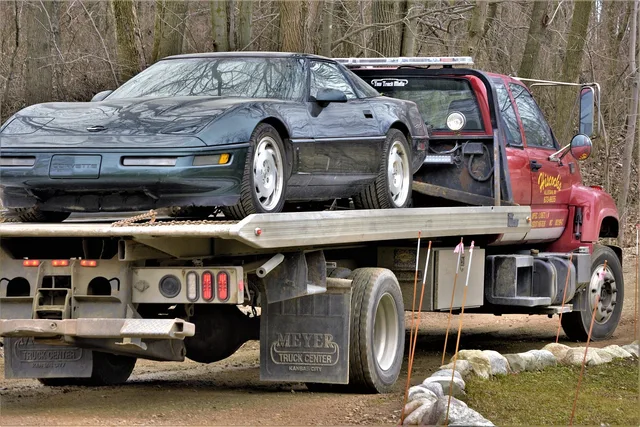
A wheel-lift truck lifts two wheels and tows the rest rolling. A flatbed carries the whole vehicle on the deck. Both are light-duty tools and they earn differently.
Wheel-Lift vs Flatbed
Wheel-Lift
- How it tows
- Lifts two wheels
- Best for
- Accidents, tight streets
- Speed
- Fast hookups
- Job types
- Quick disablement
- Common choice
- Add second
Flatbed
- How it tows
- Carries whole vehicle
- Best for
- No-roll, AWD, low-clearance
- Speed
- Slower loading
- Job types
- Dealership, long-distance
- Common choice
- First truck
Wheel-lift suits quick accident and disablement work, tight streets and fast hookups. Flatbed suits no-roll jobs, all-wheel-drive and low-clearance vehicles, long-distance transport and dealership work where the customer wants the car off its wheels.
Many one-truck owners run a flatbed because it covers more job types, then add a wheel-lift when volume justifies a second truck. Neither is wrong. What is wrong is buying a flatbed for a market that only tenders police rotation work, or a wheel-lift for a dealer contract that specifies enclosed transport.
Pricing the four lines
Price the hook, the loaded mile, the winch-out and the storage day separately. Blending them into one number makes it impossible to see which service pays for itself.
Four Pricing Lines
- Hook feeflat call-out, dispatch, travel, first hookup
- Loaded mileper mile with vehicle on truck
- Winch-outrecovery off roadway, priced by pull
- Storage daydaily rate per vehicle held
- Hook fee.A flat call-out charge that covers dispatch, travel to scene and the first hookup. It applies whether the tow is one mile or twenty.
- Loaded mile.Charged per mile with the vehicle on the truck. This is where fuel and driver time live.
- Winch-out.Recovery work off the roadway, priced by the pull rather than the mile. It carries more risk and more time than a hook.
- Storage day.A daily rate per vehicle held in the yard, with the clock starting when the vehicle lands.
Typical light-duty rates in many US metros sit near $75 to $150 for a hook and $3 to $7 per loaded mile. Winch-outs often run $150 to $500, and storage $25 to $65 a day. Heavy-duty and rotator work prices far higher, and dense cities sit at the top of every range.
A worked ticket: hook $95, twelve loaded miles at $4.50 for $54, a winch-out at $250 and three storage days at $40 for $120. The invoice comes to $519. Change one line and the margin moves.
Set each rate from your own arithmetic. If your truck costs C per month to own and operate, your driver costs D per hour, and you can bill H hours in a week, your break-even per billed hour is (C + D x hours worked) / H. Substitute your own figures. Do not copy a competitor's board.
Fuel surcharges belong on the invoice as a separate line tied to a published index, not folded into the mile rate. When fuel moves, the surcharge moves and the base rate stays comparable.
Rotation lists, permits and the authorities that issue them
Police tow rotation lists are the backbone of many light-duty operations. They are also the most misunderstood part of starting up.
A rotation list is issued by the police department or the city that runs it. It is not a marketing channel you can buy into. Each agency publishes its own requirements, which may cover insurance limits, response times, storage location, equipment class and background checks. Read the issuing agency's published rules and ask its traffic division directly.
Five kinds of office issue the paperwork, and each one issues something different.
Who Regulates What
- Police department: rotation list rules
- State DOT: operating authority, registration
- City/county: business licence, tow permit
- FMCSA: interstate operations, securement
- State board: driver licence class, endorsements
- State department of transportation.Issues oversize and overweight permits, which a heavy recovery or a long tow may need, and sets incident clearance rules on state highways. In Texas, the Department of Transportation issues those permits.
- State motor carrier office.Issues intrastate operating authority and safety rules, and answers whether you need a USDOT number. In California, a tow truck above 10,000 pounds gross vehicle weight needs a Motor Carrier Permit from the DMV.
- State licensing or regulatory agency.Issues tow truck, operator and vehicle storage licences where the state runs its own program. Texas handles tow trucks, tow operators and vehicle storage through the Department of Licensing and Regulation.
- City or county licensing office.Issues local tow permits and storage lot approvals, and in some cities caps what you may charge. New York City requires a tow truck licence from the Department of Consumer and Worker Protection.
- Police traffic division or sheriff's office.Issues the rotation list itself and sets response times, insurance limits and storage standards. The California Highway Patrol runs its own tow service agreement for freeway calls.
Licensing, permit and insurance requirements vary by state, city and agency. Confirm each one with the office that issues it, and take contract and lien questions to a licensed attorney in your jurisdiction.
Money: what leaves before what arrives
Towing is a cash-hungry trade. Fuel, tires, insurance, driver wages and truck payments leave the account on a fixed schedule. Motor club and fleet invoices arrive on someone else's schedule, often thirty to sixty days later.
Cash Out vs Cash In
- Day 0Fuel, tires, insurance, wages, truck payment leave
- Day 30-60Motor club and fleet invoices arrive
- OngoingKeep buffer sized to committed monthly cost
- Day job closesInvoice fleet and dealer accounts
- Set intervalChase unpaid fleet invoices
That gap is the thing that closes young towing companies, not a lack of calls. Plan for it:
- Keep a cash buffer sized to your committed monthly cost, not to your best month.
- Invoice fleet and dealer accounts the day the job closes, with the ticket attached.
- Chase unpaid fleet invoices at a set interval rather than when cash gets tight.
- Separate one-time startup costs, deposits and working capital in your budget, and note the operating reason for each.
Startup money falls into four buckets. Price them in this order:
- Truck.A used light-duty wheel-lift or flatbed with high miles commonly sells for $25,000 to $60,000. A new flatbed often lists from $70,000 to $110,000 before a wheel lift, lights or a winch. These are typical US ranges, not quotes.
- Insurance.Commercial auto plus garagekeepers coverage is quoted per truck, per driver record and per radius. Commonly reported figures put one tow truck at $5,000 to $15,000 a year. Your state, radius, driver records and whether you store vehicles move that number, so get three quotes.
- Deposits and setup.Yard deposit, utilities, fuel card, dispatch software, signs and local licence fees. Budget a few thousand dollars for the lot, and confirm each fee with the office that charges it.
- Working capital.Three to six months of committed monthly cost, because the first fleet invoice may land thirty to sixty days after the job.
The IRS Starting a business page covers structure, tax identification and recordkeeping from day one. The SBA Business Guide covers planning, launch and growth. Neither replaces an accountant who knows your state's rules.
Staffing the first trucks
A one-truck operation is usually the owner driving. The first hire is normally a second operator, not an office person, because dispatch can run from a phone while the truck cannot run itself.
First Hire Decision
Who drives the second truck?
Hire a second operator
Owner keeps driving, dispatch from phone
Write each role around what the person decides, not the job title. A tow operator decides whether a vehicle can be moved safely and when to call for a heavier truck.
A dispatcher decides which call goes to which truck and when to tell a customer the wait is longer than quoted. A recovery supervisor decides when a scene needs more equipment.
Impound staff decide what gets released and what paperwork must be present first.
Two failure patterns show up early. Drivers quit in month two when the on-call schedule is worse than they were told. Office staff burn out when dispatch, invoicing and customer calls land on one desk with no backup.
Check pay against your own market. The Bureau of Labor Statistics Occupational Employment and Wage Statistics publishes wage estimates by occupation, state and metro area. Use it as one input, not as an offer letter.
Equipment, securement and the rules you do not set
Cargo securement on a tow truck is regulated, and the rules differ between interstate and intrastate work. FMCSA publishes its Cargo Securement Rules, covering general performance duties and provisions for roll-on, roll-off and hook-lift containers.
Securement and Legal Checks
- Read FMCSA cargo securement applicability
- Confirm state motor carrier rules
- Follow impound and lien procedure
- Get lien questions reviewed by attorney
- Use certified towing and recovery training
Read the applicability section before assuming it binds you. Then confirm with your state motor carrier office what applies to your operation, your equipment and the loads you actually carry.
Two more areas sit outside what any guide can settle:
- Impound and lien procedures.Each state sets its own notice, hold and sale rules. Follow the issuing agency's published procedure and get lien questions reviewed by an attorney.
- Scene and recovery safety.Working a live roadway is a trained skill. Refer to certified towing and recovery training and your state or provincial safety authority.
No article, including this one, substitutes for those sources.
A worked first-year check
Run this on your own numbers before you sign anything. It is arithmetic, not a forecast.
First-Year Check Numbers
- Truck cost per monthPayment, insurance, maintenance
- Driver cost per hourWage plus payroll burden
- Billable hours per weekRealistic, after fuel and admin
- Break-even per billed hour(Truck cost + driver cost x hours) / billable hours
| Line | What goes in it | Why it matters |
|---|---|---|
| Truck cost per month | Payment or lease, insurance, maintenance reserve | Sets your break-even per billed hour |
| Driver cost per hour | Wage plus payroll burden | The largest variable on every call |
| Billable hours per week | Realistic, after fuel stops, waiting and admin | Most owners overstate this by a third |
| Break-even per billed hour | (Truck cost + driver cost x hours) / billable hours | Your floor, before profit |
| Cash runway | Buffer / committed monthly cost | How many months you can absorb a slow stretch |
If the break-even per billed hour sits above what your market pays for a hook, the truck is wrong, the market is wrong, or the plan is early. Better to find that on paper than in month four.
Common questions
Do I need a DOT number to start a towing company?
It depends on whether you cross state lines and what you haul. Interstate operations generally fall under FMCSA registration, while intrastate work is governed by your state motor carrier office. Ask that office directly, since the threshold varies.
Can I get on a police rotation list right away?
Only if the issuing agency has an opening and you meet its published requirements. Lists are run by the department or city that owns them, with their own insurance, storage and response standards. Contact the traffic division and read its rules first.
How should I price a winch-out?
Price it as its own line, separate from the hook and the mile, because it takes more time and carries more risk. Build the rate from your break-even per billed hour plus the extra time and equipment the pull needs. Do not fold it into a flat tow rate.
What is the biggest first-year mistake?
Buying equipment ahead of demand. A truck bought for work that has not been tendered yet still carries a payment, insurance and a parking space.